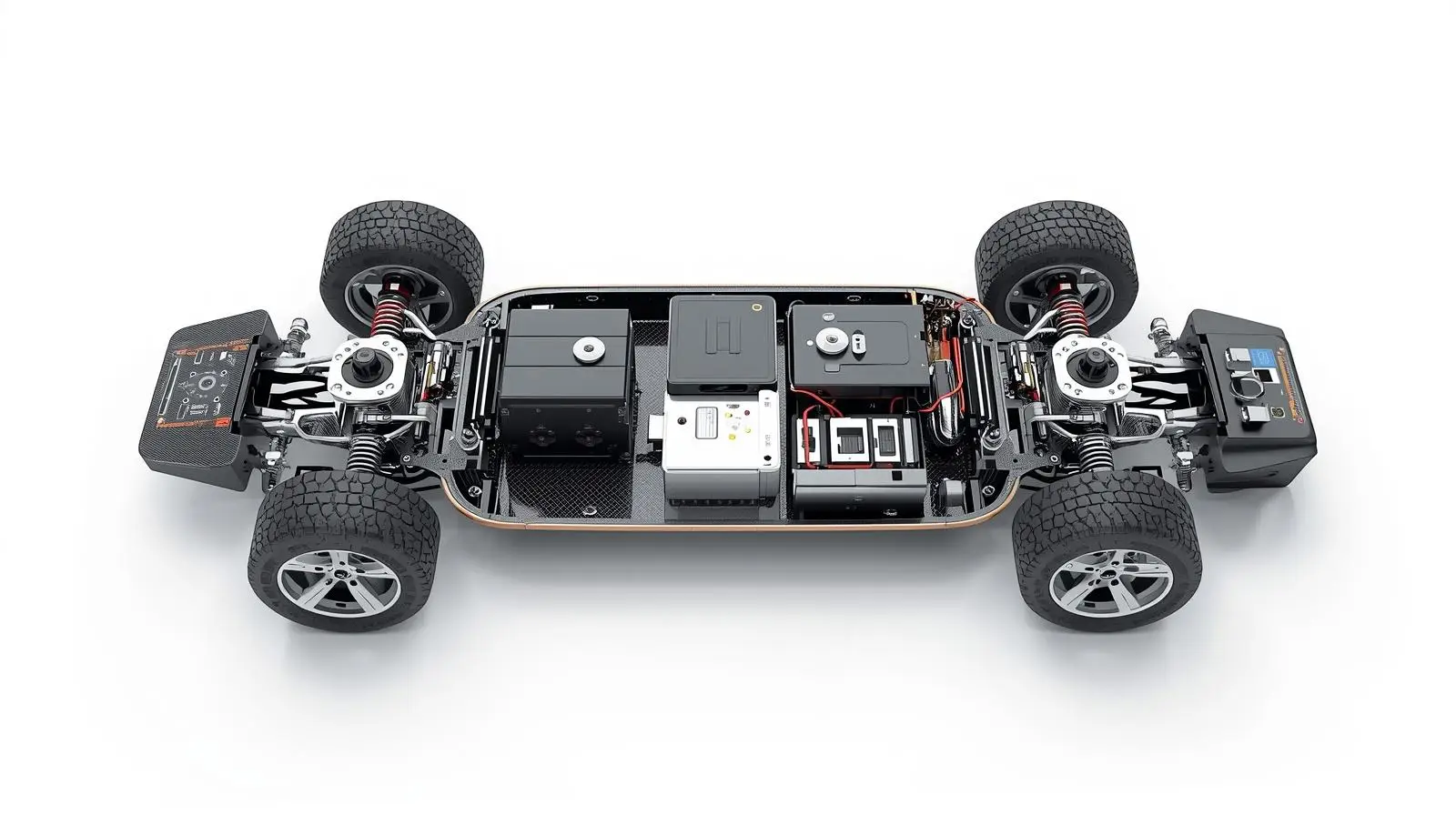
Modular Drive Systems: How Platform Thinking Is Transforming Industrial Development

Industrial development is entering a new era: modular drive systems and platform-based thinking are fundamentally transforming how modern machines are built. By relying on intelligent, scalable foundations, a wide range of applications—from mobile machinery to robotics—can now be developed faster, more flexibly, and more efficiently. But what does this mean in practice, and why is it becoming one of the key competitive advantages in the industry?

Vecsés
20/04/2026
7 min
GRAFIKA_3_MARCIUS
Platform-Based Drive Systems: Modular Architecture for Industrial Flexibility

What Is Platform Thinking in Industry?

For decades, industrial manufacturing has largely operated in a project-based logic: every new machine, every new application required dedicated engineering solutions. This model is reliable, but often slow and resource-intensive.

Platform thinking shifts the focus from individual products to system-level architecture.

According to analyses by McKinsey and BCG, platform strategy in manufacturing means building multiple product variants on a shared technical foundation. Instead of redesigning each machine from scratch, companies develop a modular base platform from which different configurations can be rapidly derived.

This approach has long been standard in the automotive industry. Today, it is increasingly shaping the world of industrial drive systems.

The Core Elements of a Modular Drive System

A true platform-based drive system is more than a collection of electric components. It is a predefined, scalable architecture designed for adaptability.

Key elements include:

  • interchangeable motor

A motor family with identical mechanical and electrical interfaces, allowing performance levels to be adjusted without redesigning the entire system.

  • scalable inverter

A drive controller that can be expanded in power range or parametrized via software. IEEE Spectrum highlights intelligent, software-defined power control as one of the defining characteristics of modern electric drive systems.

  • modular battery

Energy modules that can be connected in series or parallel, enabling different runtime and power requirements to be addressed within the same platform.

  • standard interfaces

Mechanical, electrical, and communication standards ensure compatibility. CAN-based systems, industrial Ethernet protocols, and predefined mounting geometries allow components to remain interchangeable.

Modularity is not simply about assembling parts. It is about designing the architecture from the outset to support structured scalability.

bibuskft
Unified Platform, Interchangeable Modules: A New Logic for Industrial Drive Systems

Key Advantages

A modular drive system is not merely a technical concept - it is a strategic tool.

  • shorter development cycles

When the base architecture is already validated, developing a new machine variant becomes a matter of configuration rather than reinvention.

  • scalability

The same platform can serve a compact mobile unit and a larger industrial installation. Differences are reflected in module size, number, or software configuration.

  • simplified service

Standardized components reduce spare part complexity. Maintenance teams deal with known modules rather than unique, one-off solutions.

  • faster time-to-market

BCG emphasizes that modular product architecture significantly reduces time-to-market. This advantage is especially critical in electrification-driven sectors, where regulatory and technological changes occur rapidly.

ELECTR~1
Electric Drive Platform for Mobile Applications: Integrated Power and Control Built on a Single Modular Foundation

Where Is It Already Visible Today?

Modular drive platforms are not theoretical concepts - they are already in operation across multiple industries.

  • Mobile machinery

Construction and agricultural equipment increasingly share electric drive platforms across different machine categories. Variations are often achieved through software settings and battery scaling.

  • Marine applications

In electric and hybrid propulsion systems, platform-based thinking is particularly valuable. A harbor workboat, a passenger catamaran, or a specialized industrial vessel can be built on identical core modules, adapted through energy storage and control configurations.

  • Robotics

According to the International Federation of Robotics (IFR), modularity is a defining trend in robotic systems. Unified drive platforms, standardized control units, and scalable energy systems enable rapid customization and cross-industry deployment.

  • Specialized industrial equipment

In mining, airport logistics, or material handling, electrification becomes economically viable even at lower production volumes when based on a reusable drive platform rather than fully customized engineering.

Toward a Long-Term Industrial Ecosystem

The impact of platform thinking extends beyond individual machines.

Around a modular drive platform, a broader ecosystem can emerge. Standardized interfaces allow suppliers to develop compatible energy storage systems, advanced inverters, or intelligent diagnostic solutions.

This model:

  • reduces technological risk
  • strengthens partnership networks
  • accelerates innovation cycles

The next phase of industrial electrification is unlikely to be defined by isolated custom solutions. Instead, it will be shaped by interoperable systems built around scalable platforms.

The real question is not whether modular drive systems will define the future — but which companies will create the platforms capable of supporting a sustainable industrial ecosystem.

Platform thinking in industry is not simply an engineering methodology. It is a strategic commitment to long-term competitiveness.
Related articles

BIBUS_4
BIBUS_3
BIBUS_2
EVENTENG